
The country's GDP is likely to grow at 1.3 per cent in the fourth quarter of 2020-21 and may see a contraction of around 7.3 per cent for the full financial year, according to an SBI research report 'Ecowrap'. The e-National Statistical Office (NSO) will release the GDP estimates for the March 2021 quarter and provisional annual estimates for the year 2020-21 on May 31. "Based on our 'nowcasting model', the forecasted GDP growth for Q4 would be around 1.3 per cent (with downward bias) as against NSO (National Statistical Office) projection of a negative (-)1 per cent," the research report said.

The Reserve Bank of India on Friday revised upwards the GDP growth projection for the current fiscal to 7.2 per cent from 7 per cent on rising private consumption and revival of demand in rural areas. Unveiling the bi-monthly monetary policy, RBI Governor Shaktikanta Das said estimates released by the National Statistical Office (NSO) placed India's real gross domestic product (GDP) growth at 8.2 per cent in 2023-24. "During 2024-25 so far, domestic economic activity has maintained resilience," he said, adding that manufacturing activity continues to gain ground on the back of strengthening domestic demand.

India's industrial production growth decelerated to an 8-month low of 2.4 per cent in November, mainly due to poor showing by the manufacturing sector, according to the official data released on Friday. The factory output growth measured in terms of the Index of Industrial Production (IIP) was 7.6 per cent in November 2022. The previous low of IIP growth was recorded at 1.9 per cent growth in March 2023.

Fresh formal job creation cooled for the second consecutive month to decline to a six-month low in September, signalling a downturn in the labour markets this financial year. The number of new monthly subscribers under the Employees' Provident Fund (EPF) declined by 6.45 per cent to 891,583 in September from 953,092 in August, shows the latest payroll data released by the Employees' Provident Fund Organisation (EPFO). Besides, the net payroll additions -- calculated by taking into account the number of new subscribers, the number of exits, and the return of old subscribers -- increased by 14.9 per cent to 1.72 million in September from 1.49 million in August.

India's current account deficit (CAD) may dip further in the March quarter of FY24 as pressure from the negative net exports during the January-March period eased to an 11-quarter high. A part of the gross domestic product (GDP) data, net export- which is usually negative for India - captures the difference between exports and imports of both goods and services, while the CAD data, released by the Reserve Bank of India (RBI), also factors in private transfer receipts.

India's economic growth slowed to near two-year low of 5.4 per cent in the July-September quarter of this fiscal due to poor performance of manufacturing and mining sectors, but the country continued to remain the fastest-growing large economy, data showed on Friday. The gross domestic product (GDP) had expanded by 8.1 per cent in the July-September quarter of 2023-24 fiscal. The previous low level of GDP growth at 4.3 per cent was recorded in the third quarter (October-December 2022) of financial year 2022-23.
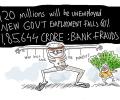
Dominic Xavier wonders what will happen to the poorest who have been ravaged by the strict lockdown imposed by the Narendra Modi govt in the wake of the Coronavirus pandemic and the unemployment rates spiralling out of control every passing month.

Automobile, apparel and electronics are among sectors that see a sales boost during the festival season, a time when investors expect gains in related stocks. This year could be different: Analysts have factored in all positives and do not expect such stocks to deliver lucrative returns. "Indian households spend across sectors like automobiles, consumer durables, and consumer staples during the festival season.

India's industrial production growth rose to a 14-month high of 10.3 per cent in August, mainly due to good show by the manufacturing, mining and power sectors, according to the official data released on Thursday. The factory output growth measured in terms of the Index of Industrial Production (IIP) had contracted by 0.7 per cent in August 2022. The previous high was recorded at 12.6 per cent growth in June 2022.

India's industrial production growth accelerated to 16-month high of 11.7 per cent in October, mainly due to double-digit growth in manufacturing, power and mining sectors' output, according to the official data released on Tuesday. The factory output growth measured in terms of the Index of Industrial Production (IIP) had contracted by 4.1 per cent in October 2022. The previous high of IIP growth was recorded at 12.6 per cent in June 2022.

India's industrial production rose by 7.1 per cent in November 2022 after contracting in October, according to official data released on Thursday. The Index of Industrial Production (IIP) grew by 1 per cent in November 2021.
India's industrial production rose to 5.2 per cent in May from 4.5 per cent in April 2023, mainly due to good performance by the manufacturing and mining sectors, according to the official data released on Wednesday. The factory output growth measured in terms of the Index of Industrial Production (IIP) stood at 19.7 per cent in May 2022, mainly due to a lower base effect. "The growth rates over corresponding period of previous year are to be interpreted, considering the unusual circumstances on account of COVID 19 pandemic since March 2020," an official statement explained.

India's industrial production growth rose marginally to 5.6 per cent in February from 5.5 per cent in January 2023, mainly due to good performance of the power, mining and manufacturing sectors, according to official data released on Wednesday. There was an improvement on an annual as well as sequential basis. The factory output growth measured in terms of the Index of Industrial Production (IIP) stood at 1.2 per cent in February 2022.
India's economic growth slowed to a 15-month low of 6.7 per cent in April-June 2024-25, mainly due to poor performance of the agriculture and services sectors, government data showed on Friday. The gross domestic product (GDP) expanded by 8.2 per cent in the April-June quarter of 2022-23. India, however, remained the fastest-growing major economy, as China posted a 4.7 per cent growth in April-June 2024.

Retail inflation eased to an 11-month low of 4.83 per cent in April as prices of some kitchen items declined though overall food basket firmed up marginally, according to a government data released on Monday. The Consumer Price Index (CPI)-based retail inflation was 4.85 per cent in March. It was 4.7 per cent in April 2023.
India's industrial production growth rose to a five-month high of 5.7 per cent in July, mainly due to good showing by the manufacturing, mining and power sectors, according to the official data released on Tuesday. The factory output growth measured in terms of the Index of Industrial Production (IIP) stood at 2.2 per cent in July 2022. The previous high was recorded at six per cent growth in February 2023. Thereafter, the growth rate declined to 1.9 per cent in March 2023 before rising to 4.6 per cent in April and further to 5.3 per cent in May.

As per the first advance estimates of national income released by the National Statistical Office (NSO) on Friday, the manufacturing sector output is estimated to grow to 6.5 per cent in the current fiscal compared to 1.3 per cent in 2022-23. Similarly, mining sector growth is estimated at 8.1 per cent in the current fiscal against 4.1 per cent in 2022-23.
India's industrial production growth perked up slightly to 5.2 per cent in January from 4.7 per cent in December 2022, mainly due to good performance of the power, mining and manufacturing sectors, according to official data released on Friday. There was an improvement on an annual as well as sequential basis. The factory output growth measured in terms of the Index of Industrial Production (IIP) stood at two per cent in January 2022.
India's industrial production growth declined to a three-month low of 3.7 per cent in June mainly due to poor showing by the manufacturing sector, according to the official data released on Friday. The factory output growth measured in terms of the Index of Industrial Production (IIP) stood at 12.6 per cent in June 2022 on account of a lower base effect. The previous low of IIP was at 1.9 per cent in March 2023.

Retail inflation breached the RBI's comfort zone and rose to a three-month high of 6.52 per cent in January, mainly on account of a spike in food prices, as per government data released on Monday. The inflation rate based on the Consumer Price Index (CPI) stood at 5.72 per cent December and 6.01 per cent in January 2022.

The quality of employment has deteriorated in 12 of the 21 major states and Union Territories, as the proportion of workers in regular or salaried jobs declined between July 2022 and June 2023 compared to the previous year, according to a Business Standard analysis of the latest Periodic Labour Force Survey (PLFS) released by the National Statistical Office. Assam experienced the most significant decline in the share of workers in salaried work, dropping by 8.7 percentage points to 10.8 per cent in the July 2002-June 2023 period from 19.5 per cent in the July 2021-June 2022 period. This was followed by Delhi (6.2 percentage points), Uttarakhand (5.2 percentage points), and Chhattisgarh (1.6 percentage points).

SEBI alleges Jane Street placed bets on the stock market falling and then acted in a way to make the market actually fall so it could win its bet.

India's industrial production growth slipped to five-month low of 1.1 per cent in March from 5.8 per cent in February 2023, mainly due to poor performance of power and manufacturing sectors, according to official data released on Friday. The previous lowest level of growth was recorded in October 2022 at a contraction of 4.1 per cent. The factory output growth measured in terms of the Index of Industrial Production (IIP) stood at 2.2 per cent in March 2022.

Equity benchmark indices Sensex and Nifty hit their all-time high levels on Friday helped by impressive GDP data and fresh foreign fund inflows. Also, a rally in global markets added to the positive momentum in the equity markets. The 30-share BSE Sensex jumped 1,139.04 points to 73,639.34 -- its all-time peak -- in the late afternoon trade.

India's economy grew 7.8 per cent in the March quarter, pushing up the annual growth rate to 8.2 per cent, according to official data released on Friday. Growth in the January-March period was lower than the 8.6 per cent expansion in the December quarter.

In a double delight, retail inflation eased to a one-year low of 5.72 per cent - staying below the upper tolerance limit for two months in a row, while factory output rose sharply to 7.2 per cent on the back of healthy growth in manufacturing. The retail inflation numbers based on Consumer Price Index (CPI) will provide some room for the Reserve Bank to further moderate the quantum of hike in key interest rate or even press a pause button. The RBI has been on a rate hiking spree since May 2022 in its bid to tame inflation, having raised the repo rate by a cumulative 225 basis points (bps).

India's economic growth surged to 20.1 per cent in the April-June quarter of this fiscal, helped by a low base of the year-ago period, despite a devastating second wave of COVID-19. The gross domestic product (GDP) had contracted by 24.4 per cent in the corresponding April-June quarter of 2020-21, according to data released by the National Statistical Office (NSO) on Tuesday. The government had imposed a nationwide lockdown at the onset of the COVID-19 pandemic last year.

'...they always address problems superficially, never tackling root causes.' 'Currently, the policy response will focus on immediate relief -- getting people to safety, providing facilities, clearing debris.' 'This is necessary, but once immediate relief operations end, everything returns to 'normal' without addressing underlying vulnerabilities.'

The share of women employed in regular salaried jobs in urban India hit a fresh low in the January-March quarter (Q4) of 2023-24 (FY24). In the same period, the share of women engaged in self-employment went up. An analysis of the latest quarterly Periodic Labour Force Survey (PLFS) data showed the share of women in regular wage work among all employed women stood at 52.3 per cent in Q4FY24, down from 53 per cent in the previous quarter.

When the government chooses to either ignore or use identity documents only when it suits them, it shakes people's sense of stability, notes Shyam G Menon.

Snapping its declining trend, retail inflation rose to a three-month high of 5.55 per cent in November on firming food prices, including vegetables and cereals, though it remains within the RBI's comfort zone of less than 6 per cent. Inflation based on the Consumer Price Index (CPI) was 4.87 per cent in October and 5.88 per cent in November 2022, the government data released on Tuesday showed. The previous high was 6.83 per cent in August and inflation had been on a decline since then.
Moody's Ratings on Thursday raised India's GDP growth forecast for FY24 to around 8 per cent from 6.6 per cent on the back of strong domestic consumption and capital expenditure. The estimate comes a day after RBI Governor Shaktikanta Das said the economic growth in the current financial year could be close to 8 per cent in view of the third quarter GDP data released by the government. The latest estimate of Moody's is about 140 basis points higher than the earlier projection of 6.6 per cent made in November 2023.

India will drive growth in the Asia-Pacific (Apac) region as the growth engine is likely to shift from China to South and Southeast Asia in the coming years, S&P Global Ratings said in a report on Tuesday. The rating agency's report projected China's growth to slow down to 4.6 per cent by 2026 from an estimated 5.4 per cent in 2023. India is likely to clock 7 per cent economic growth from 6.4 per cent estimated for 2023.

Retail inflation rose to three-month high of 4.81 per cent in June, mainly on account of hardening prices of food, according to the government data. Inflation based on the Consumer Price Index (CPI) stood at 4.31 per per (revised upward from 4.25 per cent) in May and 7 per cent in June 2022. The inflation, however, remains within the RBI's comfort level of below 6 per cent.

The Interim Budget for 2024-25 (FY25) to be presented on February 1 is likely to assume 10-10.5 per cent nominal gross domestic product (GDP) growth against 8.9 per cent estimated for FY24 by the National Statistical Office (NSO). "We were waiting for the First Advance Estimates GDP numbers for FY24. "We will finalise the nominal GDP growth assumption for FY25 Interim Budget in a couple of days.

South African President Cyril Ramaphosa, a former anti-apartheid activist and freedom fighter, responded to Trump's claims at their meeting in the Oval Office diplomatically, countering Trump's assertions.
Retail inflation declined to 6.83 per cent in August after touching a 15-month high of 7.44 per cent in July, mainly due to softening prices of vegetables, but still remains above the Reserve Bank's comfort zone. The overall inflation in the food basket stood at 9.94 per cent in August as against 11.51 per cent in July, according to data released by the National Statistical Office (NSO) on Tuesday. Retail inflation based on the Consumer Price Index (CPI) was at 7 per cent in August 2022.


A new report, "India Justice Report 2025", highlights the stark gender disparity in India's police force, with less than 1,000 women holding senior positions like Director-Generals and Superintendents of Police. Despite growing awareness about the need for gender diversity in law enforcement, not a single state or Union Territory has met its target for women's representation in the police force. The report also emphasizes the significant challenges faced by the justice system as a whole, including infrastructural deficiencies, overcrowding in prisons, and inadequate staffing levels. The report calls for systemic reforms to address these issues and ensure a more equitable and accessible justice system for all.

A year after the RG Kar rape-murder Swarupa Dutt/Rediff look at the city where it happened, Kolkata -- its study in dichotomy, at once the self-proclaimed cultural capital of India as also a petri dish for a peculiar rage that breeds crimes against women.
